
Don't let me go
Cloud storage promises we never have to forget a memory, because we can store and refer to them forever. But what if this guarantee of longevity is actually robbing us of a more precious present?

Modern smartphone users recognise the signs. It starts with the warning: ‘Storage almost full’. A perennial reminder, displayed after each snap and progressing towards the final pronouncement: ‘iCloud storage is full’. This statement retractable only by a) purchasing more monthly storage or b) deleting files and photos.
Whether scrolling and deleting is a chore, a calming repetitive task or an enforced nostalgia trip depends on the individual user. But current upgrades and subscription models depend on a percentage of the demographic choosing to pay to store photos.
And the more you store, the more choice you have of what to look back at, right?
Wrong.
By focusing our attention on capturing our experience and saving it for later, we’re missing out on the sensory input and absorption into our long term memory that will actually preserve these moments in our mind.
Don’t let me go
iPhone 15’s campaign focussed on the 128GB of on-device storage, and the promise that, if you shelled out the £799 for the newest model, you’d never need to delete another photo.
Set to the tune of Terrace Martin's ‘Don’t Let Go’ and featuring a screen scroll of all the double shots, eyes-closed mis-takes and action shots of a photo roll, the key message clearly states: take as many photos as you want, because there’s always room for more.
Apple knows its target audience: individualist consumer maximalists. Apple’s messaging has always ensured its customers feel special and unique. An essential part of uniqueness is choice: that we make our own decisions freely, not beholden to a larger organisation or entity. In this model, consumer choice often equals maximalism: we want it all.
Maximalism is a design aesthetic that operates on the principle of ‘more is more’. Think cultivated crowded rooms with an eclectic mix of antiques and modern furnishings; bold colour-clashed walls; an abundance of detail.
We could also call the predominant consumer culture ‘maximalist’, in comparison to ‘minimalist’. Minimalism enjoyed a resurgence from its 1960s and 1970s inception in the early 2010s, encompassing everything from the intentional scaling back of items owned, decreasing house size or giving up a fixed address altogether to a high-value aesthetic style of neutral toned walls and single flowers in vases.
We could then consider maximalism as its opposite: owning more, buying the Next Best Model and never having to get rid of anything. Maximalism fits perfectly with the growth mindset and late-stage capitalism. It might not be here tomorrow, so the only way to retain choice and a chance at happiness is to grab what you can get and hold on tight.
The only problem?
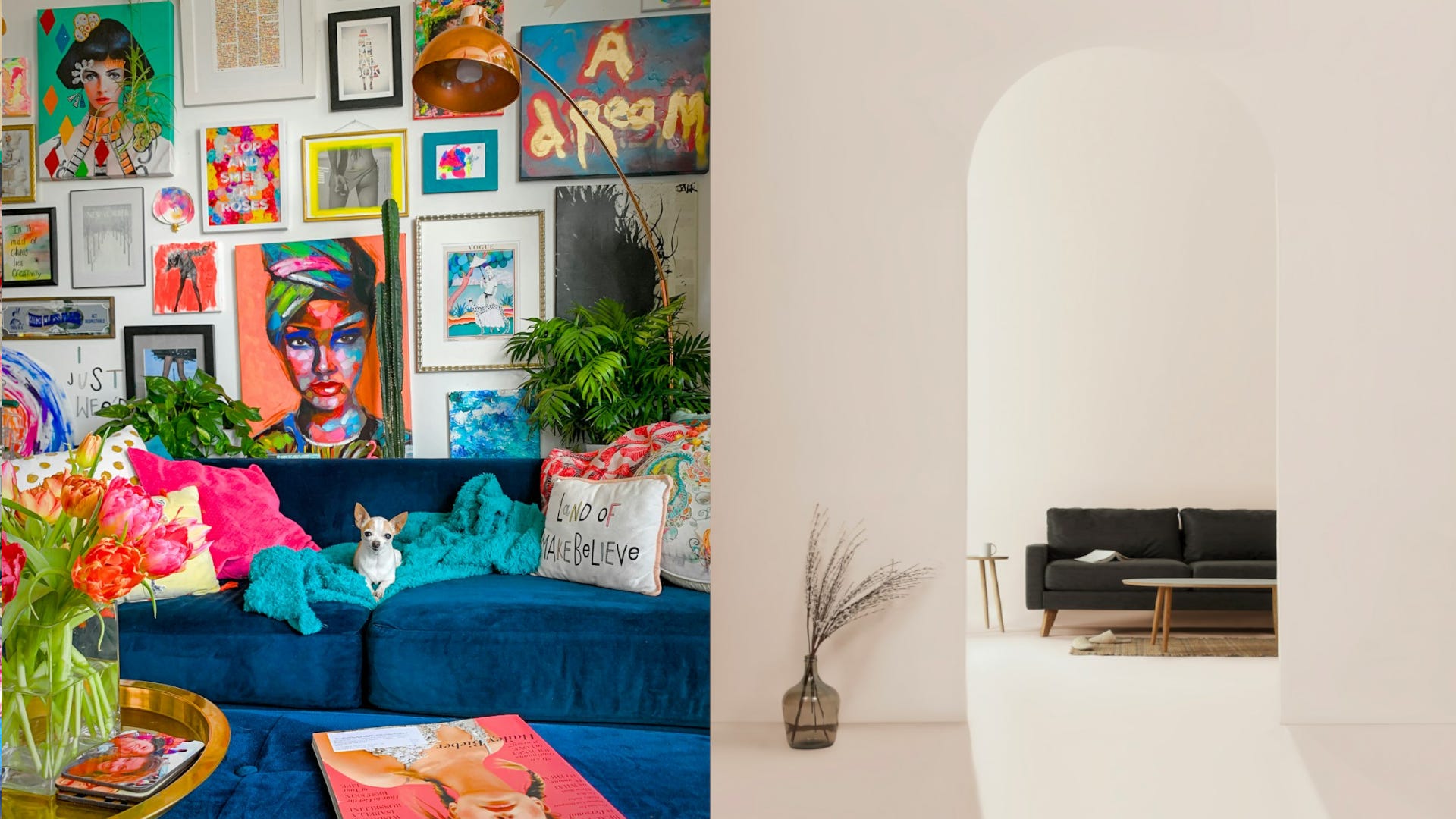
Holding on to everything doesn’t provide choice, agency or happiness. With more and more photo storage on phones, cheap clothes in closets and six different charge cords in a desk drawer, we don’t have more. We actually have less: less time, less memory capacity and less agency.
Before digital photos there was analog film
My dad had a Nikon camera. Always around his neck on family holidays, and once in a while even on a tripod with the timer set, capturing all four of us in front of an epic landmark, preserving the moment for future photo albums. More often, though, he stayed behind the camera, snapping photos on film and taking them to be developed when we returned home.
I had my own cameras growing up—including a pink and black one with matching case—a line of ever-increasing automatic features, with my last being a digital camera which I bought for a trip to Egypt in 2005 and even brought with me to Europe in 2008. My mother taught me to pose for photos, and my family snapped prolifically. Dad managed the film development and dutifully filled album after album, year on year: proof of our travels, birthdays, new cars and first days at school.
No one I knew took as many pictures as we did, though. In Stay True, the Pulitzer Prize winning coming of age memoir by Hua Hsu, he remembers a much more common relationship to photos in the last decade of the previous century:
Back then, years passed when you wouldn’t pose for a picture. You wouldn’t think to take a picture at all. Cameras felt intrusive to everyday life. It was weird to walk around with one unless you worked for the school paper, which made picture taking seem less creepy. Maybe if you had a camera, you used it during those last few days of school, at parties or as people were packing up, the logic of last-minute cramming applied to the documentation of memories.
If someone tried to take your picture, even if it was meant to be silly or spontaneous, you still fussed and awkwardly posed, because there was a finality to it, one or two snaps at most, any more would seem obsessive. A moment would pass, unremarked upon, until months later, when you developed photos you had taken at a concert or birthday party, a proper event worth chronicling, and you discovered some images of friends getting ready to go out, or else a slice-of-life candid intended to burn through the end of the roll. You'd forgotten about this. Later, when photography became ubiquitous, pictures were evidence that you existed at all, day in and day out. They registered a pattern. Looking back, you began to doubt the sequence of events. If, in the absence of proof, anything had happened at all.
In the 20th Century, to see the outcome of a photograph you’d taken, you needed to make it to the end of a 24 or 36 roll, extract it from the camera without exposing it (perhaps even manually winding back the film, before automised rewind), make a pilgrimage to a drug store or camera shop to drop it off, choose glossy or matte, and then return for the envelope with your prints and negatives inside.
A mishap could happen at any stage: you could expose the roll when taking it out of the camera, the shots could be blurry or over-exposed, or the shop could even lose your precious snaps. Photographs became artefacts the moment you held them in your hand: the weighty paper felt precious on its own, never mind what the printed image had captured. We wanted to keep them for the sake of it, even if someone’s eyes were closed or the sunset blurred.
But we also didn’t rely on photos for memories. With so many moments undocumented, we let them slip into our subconscious, either to evaporate or to resurface when a fellow party-goer relayed a story, or a family member reminisced about a cousin’s unexpected appearance at a wedding.
My memories lived inside of me, and I remembered the events as me looking out, and how I felt living them. I didn’t always have a sense of what I looked like, how I was posed, or what side of my face my fringe swept towards.

Are tens of thousands of pictures worth a hundred thousand words?
Learning to pose for family photographs, and revelling in the attention that came along with it, has followed me into adult life. I don’t have the same reluctance or discomfort I see in others my age and older—whenever I see a lens, digital or otherwise, I shift into picture-taking mode: I smile, roll back my shoulders and tilt my chin.
But when I’m behind the camera, I rotate through different phases of documenting my life with images. Since I haven’t been on a plane this year and there are no big birthdays of note, I’ve taken relatively few photos, so I haven’t had to deal with the ‘iPhone storage full’ message for awhile. I used to refuse to pay Apple anything; now, I’m up to 99p a month. When I do hit my limit, I have an elaborate system of downloading photos to an external hard drive, backing them up on a second drive, and then deleting them from the cloud. It’s boring, but I take pleasure in the knowledge I’m doing my part in freeing up a few gigabytes of space on a server housed in an air-conditioned warehouse in the California desert.
Moving beyond digital ephemera
While I well remember a time before digital photos, Journalist Sarah Krichel is a Gen Z whose whole life has existed online. In a Weekender article for The Tyee, she writes movingly about her documentation of the last days of her beloved dog, Dixie: both her frantic image-grabbing in Dixie’s final month as well as her determination to track down and itemise every photo of Dixie in existence.
‘I took nearly a thousand photos and videos of Dixie — my iPhone kept the tally. Do I look at those photos of Dixie today? Barely, if ever. They make me too sad.’
She scoured ‘the tens of thousands of photos on [her] iPhone X’ in an attempt to make a ‘master ‘Dixie’ album’, but realised that even with the help of AI she was overwhelmed by the volume of memories. Her ‘device storage inched towards capacity’ as she tried to gather, save and order screenshots, videos she’d uploaded to Instagram and images shared in her family group chat.
Krichel uses the above subtitle ‘moving beyond digital ephemera’, and takes us with her to the moment of revelation of photo-taking and memory:
‘The reason for my over-documentation, these days at least, feels less about remembering something or someone, and more about not letting go.’
I’d highly recommend the full read on The Tyee’s website, where Krichel delves into how technology reshapes how we experience loss, and how she and others are self-imposing limits on phone and tech use as a way to learn how to live in the moment again.
In Stay True, Hsu chronicles a friendship for which he has no digital evidence at all. He knew his friend for less than three years, and he has no archive through which to scroll, only a handful of printed photographs to look at. And yet his reminiscences are vibrant and tender, taking the reader back in time to immigrant culture in 90s California while giving a taste of the immediacy of each moment, and the importance of staying true to that experience.
As Krichel argues and Hsu illustrates, documenting and keeping everything doesn’t give us more memories.
In fact, it gives us less.
First, when we dedicate time to documenting or capturing a moment for the future, we create a barrier to the present experience. It doesn’t seep into our consciousness, doesn’t permeate our being, in the way it would if we put down the camera or the phone.
Second, by incessantly documenting our lives, we’re actually highlighting their lack of worth and usefulness. When a computer gets stolen and we can’t get those files, or when we lose a chunk of photos because they didn’t make it to the cloud, people describe feeling very little: no sense of loss or grief they’d expect.
Some even feel relief.
Put down your phone. Turn the kettle on the stove and listen to it sing. Note the soap dish, the window latch, the stairs. Don’t document this moment, or the next one. Trust that it has happened, and you are here.
Put down the weight of your aloneness and ease into the
conversation.
- David Whyte, Everything is Waiting for You